Ile-des-Chenes Mother Launching Steinbach Postpartum Centre and Fundraising Walk to Support Local Families
When Ile-des-Chenes resident Reese Dyck welcomed her daughter two years ago, she experienced the natural joy of new motherhood, but she was also met with an overwhelming wave of chronic anxiety and distressing, intrusive thoughts. Dyck found herself constantly worrying whether her infant daughter, Sailor Jade, was still breathing in her crib as she slept. Driven by fear, the young mother sacrificed her own rest, getting up to check on her baby every 15 minutes throughout the night. Moving through those early months, her anxiety extended to leaving the house or allowing anyone else to hold her firstborn, troubled by deep-seated fears that others might hold the baby improperly, make her ill, or accidentally drop her. Rather than easing over time, that anxiety persisted, eventually leading into severe suicidal depression when Dyck gave birth to her son, Sonnet, just 11 months later. Now, as a 22-year-old single mother, Dyck is turning her deeply personal struggles into a mission of hope and restoration for mothers across Steinbach and surrounding rural communities through her proposed Steinbach Postpartum Centre and an upcoming community walk.
Navigating the Pain of Postpartum Anxiety and Severe Depression
Reflecting on the painful period following the birth of her second child, Dyck shared how difficult it was to navigate what should have been a cherished season of life. “It was, without a doubt, the worst time in my life,” she shared. “It makes me sad to say that because, obviously, the newborn stage is something that you want to enjoy… I don’t remember a lot of the first year of his life because I was just in survival mode.”
In her search for relief and healing, Dyck sought assistance through prescribed medication and reached out to the Steinbach Family Resource Centre. However, despite these efforts, she discovered a critical gap in localized support specifically tailored for mothers suffering from postpartum conditions. The experience reinforced for her that the old adage, “It takes a village to raise a child,” must be re-examined to place equal care on the mother giving life.
Dyck emphasized that while society instinctively focuses on comforting the newborn, maternal care requires a fundamental shift. “I think the big thing is that postpartum, the baby doesn’t need to be held. Don’t worry about the baby. The baby isn’t going anywhere…But the mother is the one that needs to be held. You need to hold the mother. You need to listen to her cries. When she tells you she’s struggling, you need to listen, even if it doesn’t look like she is,” Dyck explained.
The Prince George native noted that the physiological realities of postpartum health are often vastly understated. Dyck highlighted that the extreme hormone shift women face five days after giving birth, as well as another major shift that occurs between six to 10 months postpartum, represents a biological change that is second only to the biological shift that occurs at death.
Bridging the Gap in Maternal Health and Rural Support
Dyck’s individual experience reflects a widespread challenge documented across Canada. According to a 2024 survey released by Statistics Canada and the Public Health Agency of Canada, 49 percent of mothers and birthing parents reported experiencing challenges with their emotional or mental health. Among those who faced these difficulties, 60 percent noted that their struggles began after childbirth.
Despite the high proportion of parents experiencing mental health struggles, the survey revealed that only 36 percent of respondents who had mental health challenges actually received help from a professional in 2024. Mothers cited significant barriers to accessing appropriate mental health care, including scheduling conflicts, long wait times for appointments, and a lack of information regarding where to seek help.
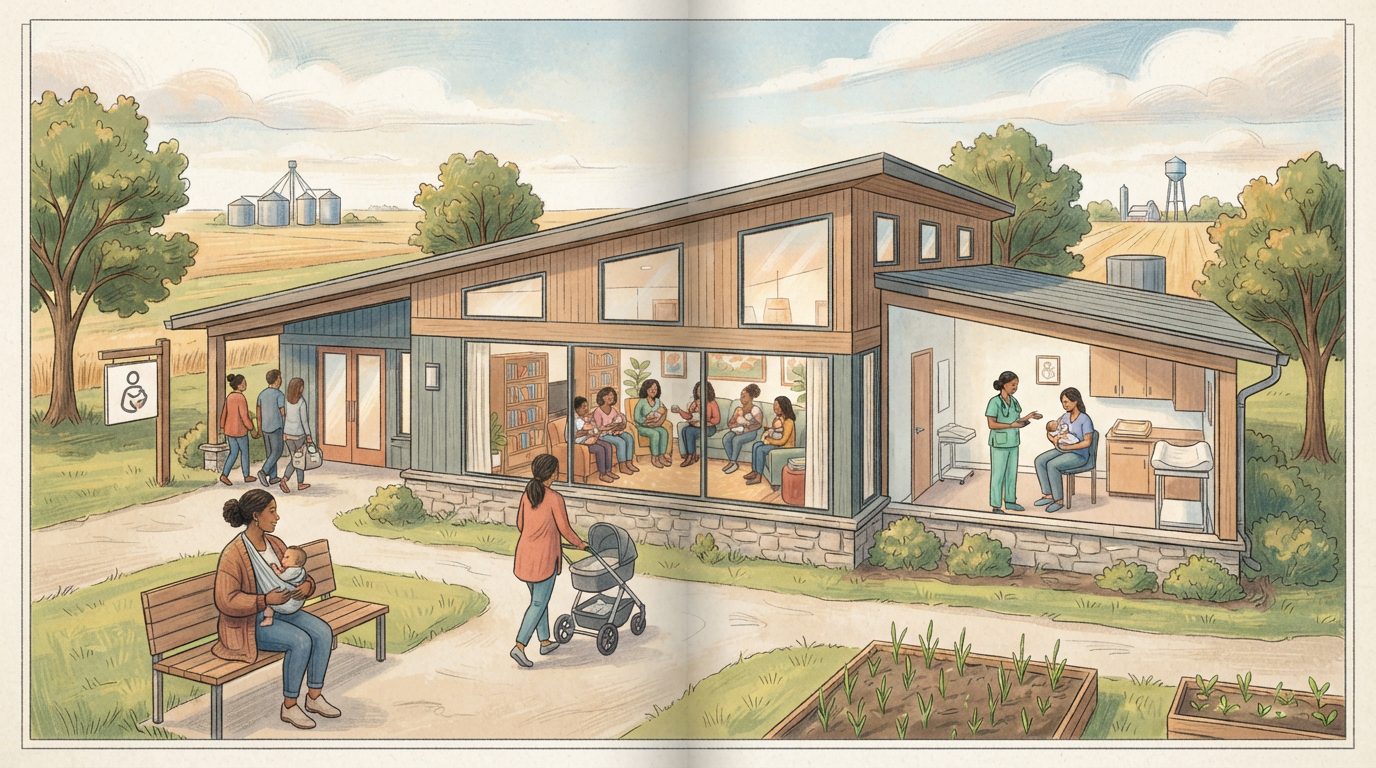
Determined to change these statistics within her local region, Dyck is working to open the Steinbach Postpartum Centre, envisioned as a comprehensive non-profit support hub. “Essentially, we are aiming to be a one-stop shop for all your postpartum needs,” Dyck said. The centre hopes to secure a location in Steinbach’s commercial district and open its doors this fall. Local doula Charlyse Litke is assisting the initiative by consulting for the non-profit organization.
Once operational, the centre plans to provide an array of essential services, including:
- Chiropractic care
- Mental health care and therapy
- Lactation consultation and care
- On-site child care
- Peer support groups
- Medical care
- Massage therapy
The organization has adopted the encouraging tagline, “Every mother deserves a village, let us be yours.”
Dyck deliberately chose Steinbach as the location for the centre so that it could serve as a central hub for mothers residing in surrounding rural areas. Speaking gently about the culture in smaller towns, Dyck observed that rural communities often carry a stronger stigma around mental health and may not openly acknowledge emotional struggles. She delicately described how the prevailing culture in small communities can sometimes pressure women with the expectation to simply “pump out babies,” leaving maternal mental health unaddressed. Because of these challenges, Dyck believes the need for dedicated support is even stronger in smaller rural communities, making a central Steinbach location vital.
Gathering the Village: Walk for Postpartum Recovery on Aug. 29
To launch this mission, raise essential funds, and break the silence surrounding maternal mental health, Dyck is organizing the Walk for Postpartum Recovery. The community event will take place on Aug. 29 at K.R. Barkman Park starting at 11 a.m.
The event is designed to bring families and community members together with several features, including:
- Multiple local vendors
- A silent auction
- A donation barbecue
- Presentations from expert guest speakers
Dyck emphasized that the walk serves multiple purposes beyond fundraising for the new centre. It is designed to raise community awareness, offer direct support, foster meaningful connections between mothers, and remind women that their worth and identity extend beyond being strictly a mom.
Offering a heartfelt message of encouragement to mothers across the region who may be quietly suffering, Dyck shared a message of solidarity: “If I can speak to postpartum mothers in the area – I see you. I understand what you’re going through. You’re doing such important work, and you’re doing incredible, despite what your brain might be telling you. And we’re here for you.”
Reporting based on coverage from The Carillon.